
Why supply still matters for a cleaner, safer car fleet
New Zealand’s transport debate is often framed in stark terms: cut emissions fast, own fewer cars, and shift to EVs as quickly as possible. At the big-picture level, that’s hard to argue with.
But there is a simple reality we cannot wish away: most New Zealanders still need a vehicle to participate in work, education, and family life. Those vehicles will not all become brand-new EVs overnight. If we mismanage the flow of vehicles into and out of the fleet, we risk slowing emissions reductions and worsening safety, not improving them.
This is where supply matters. We do not just have a “how many cars” problem; we have a “what sort of cars, at what price, and how quickly can we turn them over?” problem.
A note on fleet management (and why supply matters)
Managing a national vehicle fleet is a bit like baking a cake: you do not get a good result by throwing in one ingredient and hoping for the best. You need the right balance of inputs (new vehicles, used imports, maintenance, and end-of-life retirement), and you need to control when and where those inputs enter the system.
We fully acknowledge the role of new vehicle imports in lifting safety and reducing emissions over time. But New Zealand’s fleet renewal has also relied—consistently and successfully—on used imports to keep prices within reach for the average working family. That role is routinely overlooked or misunderstood.
A historical reminder: competition delivered real outcomes
When used imports became a major part of New Zealand’s vehicle supply, several big shifts followed that are worth remembering in today’s policy debates.
-
Road safety improved materially over the long run. New Zealand’s road toll has fallen sharply from the high-water mark era (in the 1970s it was in the 800s per year) to the low-to-mid 300s in recent years. That did not happen by accident. It reflects a long sequence of changes—safer vehicles, safer roads, better enforcement, and better emergency response. But crucially, it also reflects a fleet that was able to renew progressively, rather than being trapped in an affordability squeeze.
-
Vehicle prices became more competitive and vehicles became more affordable. As the market became more exposed to competition, the price of getting into a decent car shifted closer to what ordinary incomes could sustain.
-
Downstream costs mattered. In the old model, large annual price jumps in cars had knock-on effects across the economy (including wage pressure). A more competitive supply environment helped avoid those “automatic” price escalations.
-
We moved away from inefficient domestic assembly. New Zealand stopped propping up higher-cost assembly pathways and moved to being a standards-taker in a global market—with all the discipline that brings.
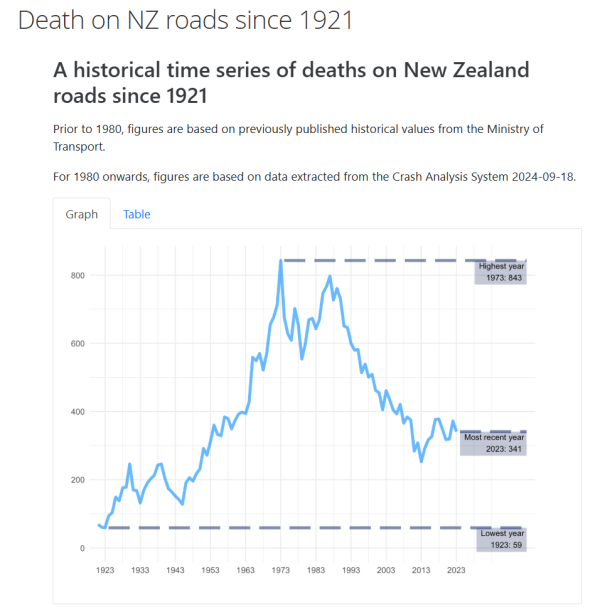
None of this is to claim that used imports “caused” every improvement in safety or every movement in inflation. But it is to say this: affordable, competitive vehicle supply has been a quiet enabler of better outcomes—because it allows households to replace older vehicles sooner.
Are we really a “dumping ground”?
A lot of commentary paints New Zealand as a dumping ground for the world’s clunkers. It is a powerful phrase, but it is not supported by the most practical measures we have for the vehicles people are actually driving.
Two national datasets consistently cut through rhetoric:
-
Clean Car Standard (CCS) data on CO₂ emissions of vehicles entering the fleet; and
-
Warrant of Fitness (WoF) outcomes showing how vehicles perform in real-world inspection once in service.
Emissions: used imports are cleaner than the new vehicles coming in
Recent CCS reports show a clear pattern: used imports entering the fleet often have lower average CO₂ than the average new vehicle being registered in the same period.
The reason used importers can look “worse” on paper is not because the vehicles are dirtier in absolute terms, but because used-sector targets are tighter and the compliance line sits in a different place. In plain English: the metric can make the used channel look worse even when it is pulling the fleet average down.
Condition and safety: used imports hold their own—and often do better
WoF data tells a similar story of quiet, incremental improvement rather than dumping.
Used imports typically arrive in a defined supply window (often around the 11-year mark, with most arriving at 12 years or younger). In those exact age bands:
-
used imports commonly fail fewer WoFs than NZ-new vehicles of the same age;
-
the gap can be meaningful in the mid-age years; and
-
only at older ages do the rates converge and then, at the margin, sometimes reverse slightly.
And what are vehicles failing on? Not “clunker” stereotypes. Mostly:
-
tyres and brakes,
-
lights,
-
steering/suspension,
-
wipers/glazing.
That is what a working, regulated fleet looks like: vehicles age, parts wear, and inspections catch the things that need fixing.
The policy trap: when standards forget affordability
If we squeeze supply too hard—through standards, charges, or by pushing specification requirements beyond what is available at affordable price points—three things happen:
-
People hold on to older, dirtier, less safe vehicles longer.
-
The limited number of “good” vehicles are bid up in price, shutting lower- and middle-income households out.
-
We drift into a two-tier fleet: a newer, safer fleet for the well-off, and a tired fleet for everyone else.
That is the opposite of a just transition.
And here is a point policymakers need to be honest about: an older used vehicle cannot be expected to meet the same specification as a new vehicle. That does not mean safety should stand still—it means settings must reflect real-world availability and the actual renewal pathway of the fleet.
It is also naïve to pretend there are no commercial incentives in play. It is in the interests of new-vehicle suppliers to prefer rules that push the used channel into “new-car spec” territory. Government’s job is not to pick winners—it is to deliver a safer, cleaner fleet that New Zealanders can actually afford.
Managing the fleet: better inflows, smarter outflows
A balanced strategy is straightforward:
1) Better inflows: keep the pipeline of good vehicles open
New Zealand needs continued supply of vehicles that:
-
are lower-emitting than the vehicles they replace,
-
are in good condition at entry,
-
can be purchased on real household incomes.
That means:
-
new vehicles that genuinely improve the fleet average (not just larger and heavier with incremental tech), and
-
used imports selected from the best of overseas fleets—efficient petrol, hybrids, and second-hand EVs where they are genuinely available.

2) Smarter outflows: retire end-of-life vehicles faster
At the other end, we need to accelerate the retirement of the worst vehicles through:
-
credible end-of-life vehicle pathways (including responsible dismantling and recycling),
-
targeted scrappage/swap-out programmes where they are evidence-based, and
-
WoF settings that are tough on genuinely unsafe vehicles, without becoming a blunt instrument that punishes origin rather than condition.
A practical pathway, not a perfect one
New Zealand will not copy-and-paste Norway’s EV transition. Our geography, incomes, and tax base are different. What we can do is keep moving—steadily and credibly—using the tools that work in our context.
Used imports are not the cause of our transport problems. They remain one of the most effective levers we have right now to:
-
lower fleet emissions,
-
improve safety over time, and
-
do it at price points the average working family can afford.
While we keep having the bigger conversations about mode shift and urban form, people still need to get to work tomorrow. Managing the fleet sensibly—through continued supply of good vehicles and planned retirement of end-of-life vehicles—is how we ensure every replacement vehicle moves New Zealand forward, not backward.